Personal Branding on LinkedIn: Why You Need a Narrative — Not a Topic
Written by
Niklas Götz
April 3, 2026

The Real Problem with Personal Branding on LinkedIn
You post regularly, seriously, and with real effort. Sometimes you get likes. Sometimes comments. But inquiries? Real visibility with the right people? Those don't come.
Often, the problem isn't actually the content itself. It's that there's no narrative behind it. That might sound abstract, but it really isn't. This article explains exactly what it means.
What Is a Narrative — and Why You Need One
Ask founders why their LinkedIn isn't working, and you'll usually get the same answers. "I don't post often enough." Or: "My content isn't good enough." Or: "I don't know what topics to cover."
But these are all symptoms, not the root cause. The real cause is this:
Your target audience doesn't just consume content — they look for patterns that make sense.
People don't follow you on LinkedIn because of individual posts. They follow you because a picture of you forms in their mind. A clear picture. An expectation. A conviction about what you stand for.
This picture requires repetition, consistency, and predictability.
"That LinkedIn guy who always talks about XYZ" is a slot in someone's mind. And you don't fill that slot with topics. You fill it with a narrative.
A narrative is the answer to a single question:
"Why should the world be different than it is — and what do I have to do with it?"
That sounds like a big question, and it is — but it doesn't have to be geopolitical. It just has to be honest, opinionated, challengeable, and born from real experience.
What a narrative is NOT:
- Niche: "I create LinkedIn content for B2B SaaS."
- USP: "Fast, affordable, data-driven."
- Topic: "I post about marketing."
- Credential: "20 years of industry experience."
All of these are categories. A narrative is a stance toward the world. And only a stance creates real resonance.
The Real Problem with Personal Branding on LinkedIn
A narrative consists of three layers. Leave one out, and you don't have a conviction — you have an opinion. And opinions are forgotten.
1. Worldview: What's wrong out there? An interpretation of reality that hits a silent pain of your avatar. For a tradesman we work with: "Trades are undervalued by society. Blue collar vs. white collar. If you didn't go to university, you're considered less worthy."
2. Position: What do you believe is the better way? Your counter-proposal. "Tradespeople deserve visibility. LinkedIn isn't just for people in suits. It's for anyone who has something to say."
3. Role: Why are YOU the one to say this? Your journey. The conviction born from experience. "I'm one of them. I show my daily work, my craft, my reality — because no one else does."
The finished narrative: "Trades are the foundation of our society — but LinkedIn still belongs to the suits. I'm changing that." That's opinionated, clear, and uncopyable — a narrative.

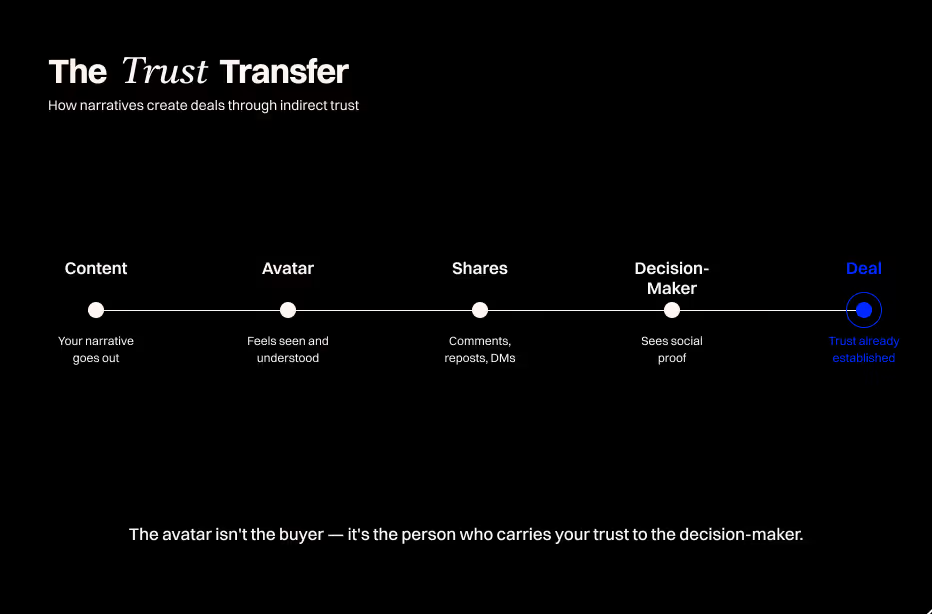
The avatar is the person who feels your narrative first. Not the one who signs the contract, but the one who nods first, comments first, and shares first. Through this sharing, they carry it to the real decision-maker. We call this the Trust Transfer.
Content → Avatar feels seen → Avatar shares or comments → Decision-maker sees it → Deal.
This works because people trust the people their own people trust. A recommendation from the inside is worth more than any ad from the outside.
Three examples from our work:
- The tradesman: He targets project managers and site managers. They read his content, feel seen, and comment.
- The influencer marketing agency: Marketing managers who fight for budget internally send the content to their CMO.
- The event agency founder: Hundreds in the events industry feel seen and think of him when talking to decision-makers.
In all three cases, the avatar is not the buyer. But without the avatar, there is no buyer.
Education or Entertainment
Once you have your narrative, the next question comes: "Okay, so what do I post now?"
The most important question is: What does my narrative demand — and what can I authentically deliver?
Education creates authority. You share knowledge. The avatar takes away something concrete every time. You become the reference, the expert, the resource. But be careful: education is a matter of substance — not style. If you're not deep enough in a topic, you simply have nothing to teach.
Entertainment creates connection. You evoke emotions. You're funny, inspiring, emotional, or opinionated. You become the personality people follow. But if you're not a natural storyteller, people notice.
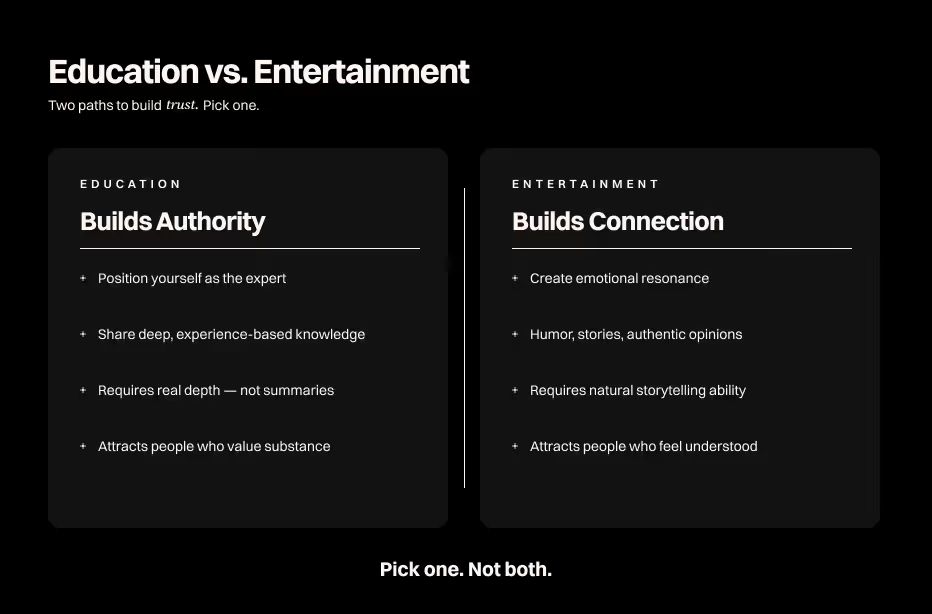
Both filters must align: What does the narrative demand? And what can the person authentically deliver? If they don't point in the same direction, better content won't help.
And one more word on edutainment: It sounds great in theory, but in practice it usually ends up too educational to feel and too emotional to truly inform. The best always make a clear choice and play it consistently.
Common Mistakes and FAQ
Mistake 1: A Hook Instead of a Narrative. "When I tell people I do online marketing, they think I want to sell them the next dropshipping course." That's funny and relatable — a good hook. But not a narrative. A hook revolves around the sender. A narrative revolves around the avatar.
Mistake 2: Targeting the Wrong Avatar. Lots of likes, barely any inquiries? Are your deals coming through LinkedIn — or despite LinkedIn?
Mistake 3: Education Without Real Substance. It sounds like summaries, not experience. Like Wikipedia, not practice.
Mistake 4: Edutainment. Trying to teach and entertain at the same time usually produces the worst of both.
FAQ:
- Narrative vs. niche? A niche describes what you do. A narrative describes why the world should be different.
- How to find your narrative? Answer three questions: What's wrong in your industry? What's better? Why you?
- Same topic always? Not the same topic — but always the same worldview.
- What is the avatar? The person who feels your narrative first. Often the one who carries it to the decision-maker.
- Education or entertainment? Depends on what your narrative demands and what you can authentically deliver.
A lack of success on LinkedIn isn't always a content problem — it's often a clarity problem. Without a narrative, you won't occupy a slot in your audience's mind. A strong narrative means you know what's going wrong, you have a clear stance, and you're the only one who talks about it this way. Then your content becomes conviction. And conviction attracts.